A day out at Slimbridge Wildfowl and Wetlands Trust, Gloucestershire.
The Wildfowl and Wetlands Trust site here at Slimbridge is a charity dedicated to the conservation of our wetlands species.
It was set up in 1946 by Sir Peter Scott who championed wild life conservation and also set up the World Wildlife Fund.
He recognised the potential of the site for the conservation, monitoring and studying of the migratory birds that flock here every winter.
This site is a massive area. Covering approximately 325 hectare (or 2,000 acres) it encompasses the grasslands of the shores of the Severn estuary and is a haven for wildlife. The reserve provides shelter and food for migratory swans, geese and ducks in the winter as well as being an ideal breeding ground for waders in the summer months. In the winter, it is home to around 35,000 wildfowl.
Slimbridge has international protection status. It is a Site of Specific Scientific Interest (SSSI), a Ramsar site as well as a being a recognised Special Protection Area. It is a great place to see rare birds and other protected species from all over the world.
It is home to the World’s largest collection of wild fowl. The UK has some of the best wetland habitats in the world. This is because the gulf stream protects the UK from the most severe winter weather meaning our climate is relatively warm. This is what attracts so many migratory birds to our shores.
Sir Peter Scott also brought the world’s rarest goose back from the brink of extinction. In the 1950s, the nene (also known as the Hawaiian goose) was close to dying out with only 30 known to be still alive. After learning of their loss of habitat to the introduction of predators, Peter stepped in and successfully launched a breeding programme; raising them in captivity and releasing them back into the wild. Their world-wide population is now around 3,000. His ground-breaking techniques are still applied to successful breeding programmes today.
Many of Slimbridge’s winter visitors, such as the Bewick swans and Greenland white-fronted geese, have travelled over 4,000km from the arctic tundra to get here.
There are many educational huts and hides around the site where you can get hands-on experience of identifying and monitoring the birds and animals who visit here. There are also guided walks, trails and canoe safaris too. There’s something for everyone whatever age you are. You may also be able to spot one of the UK’s rarest geese: the lesser white-fronted goose.
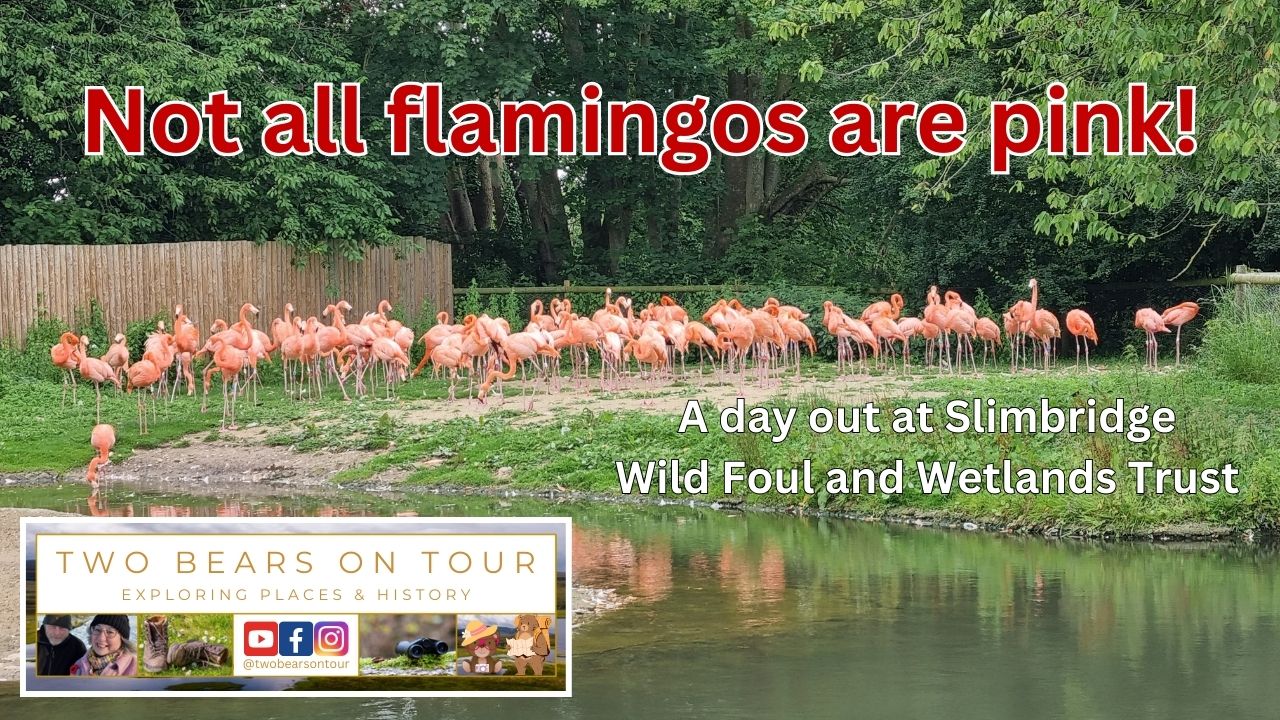
There are six species of flamingo here. The first to arrive were Chilean flamingos in the 1960s. These were closely followed by the Greater and Lesser flamingos; then the Caribbean, Andean and James’s. Now all six species of flamingo thrive here thanks to Peter’s vision and desire to keep all the species alive. Sixty years later, some of the most earliest arrivals can still be seen at Slimbridge. But they’re not all pink! They are born grey and will progress to a pink or off-white colour as their feathers develop. Their colour depends on their diet. Flamingos naturally eat algae, brine, shrimp and fly larvae which are full of carotenoids. Their bodies break these carotenoids down into pigments which turn their feathers various shades of pink and orange. The word flamingo comes from the Spanish and Portuguese words for “flame-coloured”. Did you know, one of the closest relatives to the flamingo is the pigeon?
Founder, Sir Peter Scott called Slimbridge the “avian Serengeti”, but who was Sir Peter Scott?
He was the son of the famous Antarctic explorer Robert Falcon Scott. He was also a pioneering wildlife conservationist, an accomplished artist, an inventor, an Olympic sportsman and a Naval war hero.
His godfather was J M Barrie and the character he created, Peter Pan, is who he was named after. J M Barrie’s christening gift to Peter was life membership of the London Zoological Society.
He won a bronze medal at the 1936 Olympic Games for sailing. He was also the British gliding champion in 1963 and a national championship standard ice-skater.
He was the co-founder and first chairman of the World Wide Fund for Nature and designed their famous panda logo as well as the Wildfowl and Wetland Trust’s swan logo.
He designed the trapeze that racing crews use to hang out from their sailing boats.
He also designed the rocket net which is used to catch birds.
And he designed the camouflage used by British World War Two Naval warships, for which he received the CBE.
He was an accomplished artist who secured his first art exhibition in London at the age of 24. He is best known for his painting “Taking to Wing” from which over 350,000 prints have been made.
He was a true visionary who recognised that television had the power to bring wildlife into people’s homes. In 1953, he presented the BBC’s first ever natural history programme live from his home, here in Slimbridge. He became a popular television personality, indeed, Sir David Attenborough sites Peter’s pioneering TV career as his own inspiration; referring to him as his hero and the patron saint of conservation.
His attitude to conservation was pioneering and he worked hard to secure agreements for the international moratorium on whaling in 1982, signing the Antarctic Treaty.
He started the Red Data List which records and categorises the conservation status of all known species; it is still used today.
In 1973, he became the first person to be Knighted for services to conservation.
A coral fish, called Cirrilabrus scottorum, was named after him and his wife in 1988.
And he co-founded the Loch Ness Phenomena Investigation Bureau, which was set up to study the reported sightings of Nessy, the Loch Ness Monster.
Long before biodiversity and eco-friendliness became words, Peter was championing the delicate nature of our natural world and teaching us to look after it.
The Trust at Slimbridge was set up by Sir Peter Scott in 1946 who had the vision and the mission to create a world where healthy wetland nature thrives. It is known as the birthplace of modern conservation.
Now, there are 10 WWT sites across the UK:
Why not go and visit one near you and discover these magical species for yourselves?
 twobearscottage.com